
There is more and more stress over AI, semiconductors, and other advanced technologies. Jamie Dimon and other leaders are warning that the world markets are in danger.
In this race, it’s not just about who is ahead in technology. It’s also about having power all over the world and keeping the economy stable. People who care about the future of markets need to understand what’s going on as things change..
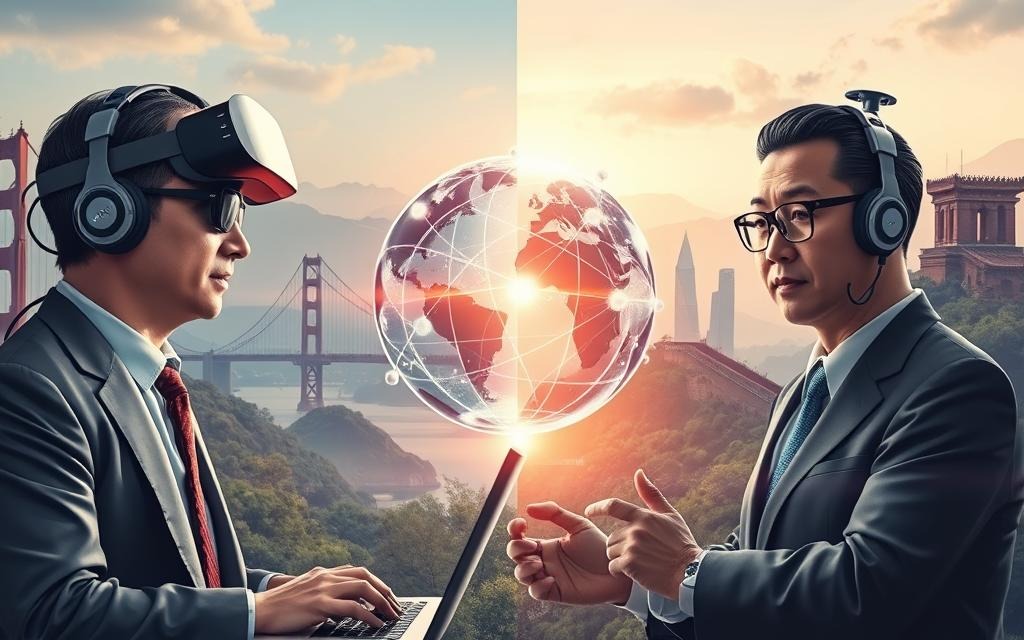
Dimon’s views give us a special look at what might happen next in this rivalry. By exploring the details, you’ll get a better sense of what’s at risk and how it affects you.
The US-China Technology Competition Dimon Warns About
Jamie Dimon warns us that the tech war between the US and China is getting worse. These two big economies are in a race to be the best at technology. This race has a big impact on the world.
Jamie Dimon, a big name in finance, talks about how dangerous this tech fight is. His words mean a lot because he knows a lot about the economy.
Jamie Dimon’s 2025 Assessment of the Tech Rivalry
In 2025, Jamie Dimon pointed out the rising tensions between the US and China. He talked about how this could affect global trade and stability. His insights remind us to stay alert to these changes.
This tech fight is not just about new ideas. It’s also about who will be the top in the economy and the military. Dimon’s warnings hint at big changes in trade and markets.
How Global Markets Are Responding to Dimon’s Warnings
Global markets are watching Jamie Dimon’s words closely. People are reacting in different ways. Some investors are changing their plans to deal with the risks and chances from this tech battle.
| Market Indicator | Response to Dimon’s Warnings | Potential Impact |
| Stock Market | Increased volatility | Higher risk for investors |
| Currency Exchange | Fluctuations in USD and CNY | Impact on international trade |
| Commodity Prices | Shifts in demand for critical materials | Changes in supply chain dynamics |
As things keep changing, it’s key to grasp the US-China tech fight. Knowing its effects on global markets is vital for businesses and investors.
How to Navigate the Key Battlegrounds of Tech Competition
The tech rivalry between the US and China is getting fiercer. Several key areas have emerged as battlegrounds. It’s essential for businesses to know these areas to make good strategies. Investors also need to understand them to make smart choices.
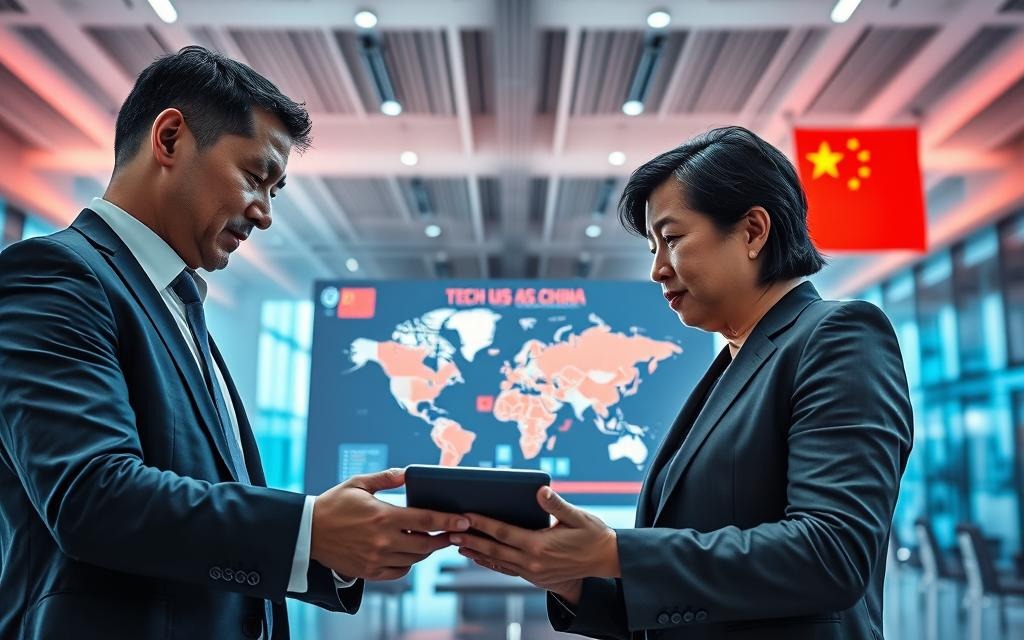
Analyzing the AI Race Between Silicon Valley and Chinese Tech Giants
The AI race is a big part of the US-China tech battle. Silicon Valley’s tech giants, like Google and Facebook, are racing with Chinese companies like Baidu and Alibaba to lead in AI. This race could change many industries, from healthcare to finance.
Understanding the Impact of Semiconductor Restrictions and Chip Bans
The US has put limits on selling advanced semiconductors to China, citing security worries. This move affects the global tech supply chain a lot. It could change how many tech products are made, from phones to data center gear.
Identifying Critical Cybersecurity Concerns for Your Business
As tech competition grows, cybersecurity worries get bigger. Companies need to watch out for supply chain risks and data breaches. It’s key to have strong cybersecurity to fight these threats.
To tackle these battlegrounds well, businesses must keep up with AI, semiconductor tech, and cybersecurity news. By knowing the innovation dynamics and geopolitical implications of the US-China tech fight, companies can find ways to reduce risks and grab chances.
How to Track Emerging Technologies Shaping the Rivalry
The US-China tech rivalry is getting fiercer. It’s key to keep up with new tech to grasp the global economic shifts. Focus on quantum computing, artificial intelligence, and cybersecurity to stay ahead.
Monitoring Quantum Computing Developments in Both Nations
Quantum computing is a big deal in the US-China tech battle. Both sides are pouring a lot of money into quantum research. This has big effects on cryptography, materials science, and solving complex problems. Keep an eye on projects like China’s QUESS and the US’s National Quantum Initiative.
Evaluating Chinese Innovation vs. American R&D Strategies
The US and China have different ways of innovating and doing R&D. China invests big in new tech, while the US relies on the private sector. Knowing these strategies helps predict the future of the tech rivalry.
Assessing Military and Space Technology Advancements
Advances in military and space tech are key in the US-China rivalry. Watch for updates on hypersonic missiles, satellite tech, and space exploration. Both countries are spending a lot on these areas, affecting national security and global power.
Some key areas to watch include:
- Advances in quantum computing and its applications
- Development of AI-powered military systems
- Progress in space exploration and satellite technology
By following these emerging tech areas, you can understand the US-China tech rivalry better. This helps you see how it affects the global economy.
How to Interpret 2024-2025 Policy Developments
As we move towards 2024-2025, the US-China tech rivalry’s impact is clear. This rivalry is fueled by new policy trends. It’s key to grasp these policy shifts and their tech industry effects.

Decoding Recent US Export Controls and Their Implications
The US is strengthening its export controls on advanced tech, like semiconductors and AI. These moves aim to limit China’s tech growth by blocking access to key technologies.
Key implications: Companies using US tech must follow these rules to avoid fines. They should check their supply chains and products to make sure they don’t help restricted Chinese groups.
Understanding China’s Self-Sufficiency Initiatives and Countermeasures
China is speeding up its push for self-sufficiency in tech, thanks to US controls. It’s investing heavily in research and development in key areas.
Countermeasure analysis: It’s vital for businesses to grasp China’s plans to stay ahead. They should keep an eye on Chinese policy changes and investment moves.
Analyzing Diplomatic Negotiations and Their Tech Industry Impact
Talks between the US and China will shape the tech world’s future. The results could lead to more rules or a thaw in tensions.
| Policy Development | Potential Impact | Business Response |
| US Export Controls | Restricts China’s access to advanced tech | Compliance and supply chain assessment |
| China’s Self-Sufficiency | Accelerates indigenous tech development | Monitor Chinese investments and policies |
| Diplomatic Negotiations | Could ease or tighten tech restrictions | Stay informed on negotiation outcomes |
How to Prepare Your Business for the Divided Tech Ecosystem
The tech world is getting more split, and companies must get ready for this change. The US-China tech battle is making things more divided, affecting businesses everywhere. It’s key to know how this rivalry affects your business.
Developing Dual-Track Strategies for US and Chinese Markets
To do well in this split tech world, businesses must have plans for both US and Chinese markets. They need to know the special rules and needs of each place. For example, they might have to follow different data rules and tech standards.
Studies show that companies with plans for both markets are doing better. They can make products that fit each market’s needs, giving them an edge.
“The key to success lies in being adaptable and responsive to the changing regulatory landscape.”
Jamie Dimon
Mitigating Supply Chain Risks in Your Industry
The tech battle has made supply chain risks bigger, mainly for those using semiconductors. To lessen these risks, businesses should spread out their suppliers and work on managing risks.
| Risk Mitigation Strategy | Description | Benefits |
| Diversification | Spread suppliers across different regions | Reduced dependence on single suppliers |
| Risk Management | Invest in predictive analytics and monitoring | Early detection of possible disruptions |
Identifying Investment Opportunities Amid Geopolitical Tensions
Even with the US-China tech fight, there are chances for growth and new ideas. By getting the innovation dynamics, businesses can find good places to invest for their future.
For instance, investing in new tech like quantum computing and AI can help with digital transformation. By keeping up with new tech, companies can find new chances and stay ahead.
From a Jamie Dimon perspective, businesses must act fast to keep up with the tech changes. By thinking ahead, companies can handle the split tech world and come out stronger.
Conclusion
You now know a lot about the US-China tech competition and its big effects. Jamie Dimon has warned us about how this rivalry is changing the world economy. This fight is not just about new tech; it also has big political impacts that affect businesses everywhere.
The main areas of this competition, like AI, chip restrictions, and cybersecurity, will keep changing the tech world. It’s important to keep up with new tech, policies, and how they might affect your business.
By getting the US-China tech competition, you can find ways to reduce risks and grab chances. As the world economy keeps changing, it’s key to stay ahead to succeed.
FAQ
What is the US-China technology competition, and why is it significant?
The US-China tech competition is a rivalry in the tech world. It’s about who gets to lead in new tech, innovation, and global markets. This battle is big because it affects the world economy, trade, and security.
What are Jamie Dimon’s views on the US-China tech competition?
Jamie Dimon, a top business leader, is worried about the tech fight between the US and China. He says it could hurt the economy and urges companies to get ready for a split tech world.
How is the AI race between Silicon Valley and Chinese tech giants impacting the global tech landscape?
The AI race is pushing tech forward, with Silicon Valley and Chinese giants racing to lead. Their big investments in AI are changing the global tech scene.
What are the implications of semiconductor restrictions and chip bans on the tech industry?
Chip bans and limits can really mess up the tech world. They cause supply chain problems, raise costs, and make it harder for companies to compete. Businesses must understand these issues to survive.
How can businesses prepare for the divided tech ecosystem?
Companies can get ready by making plans for both the US and Chinese markets. They should also work on avoiding supply chain issues and finding new investment chances despite tensions.
What are the emerging technologies shaping the US-China tech rivalry?
New tech like quantum computing, advanced chips, and cybersecurity are key in the US-China fight. Both sides are spending a lot to stay ahead.
How can businesses track emerging technologies and stay ahead of the competition?
Companies can keep up by watching quantum computing and comparing Chinese and American tech strategies. They should also look at military and space tech.
What are the implications of 2024-2025 policy developments on the tech industry?
New policies in 2024-2025, like US export rules and China’s push for self-sufficiency, will change the tech world a lot. They will affect global trade, investment, and innovation.